
The 2026 Nanjing Peace Forum Kicks Off
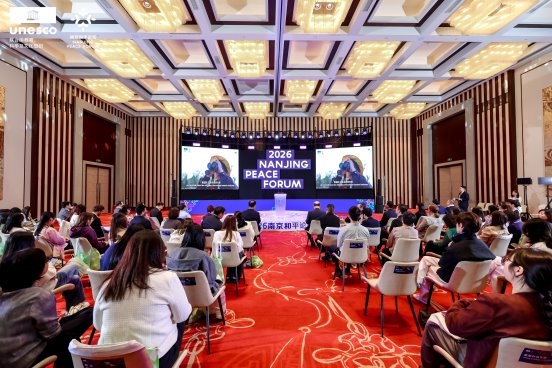
On October 15, 2026, the 2026 Nanjing Peace Forum officially opened. The event was co-hosted by UNESCO and the Nanjing Municipal People’s Government.
As 2026 marks the first year of China’s 15th Five-Year Plan and the 10th anniversary of the Yangtze River Economic Belt Initiative, this year’s forum adopted the theme “Ecological Resilience: Collective Action for a Sustainable Future.” It brought together representatives from governments, industry, academia, research institutions, enterprises, and youth groups. Participants forged consensus via dialogue, developed practical solutions, and fostered inter-civilizational dialogue and exchanges. Together, they advanced a new narrative for global governance: ecological security is peace security.
Why Nanjing? A City and the Call of an Era
Nanjing is China’s first International City of Peace. Its understanding of peace is deeply rooted in unique historical memories.
Having endured the devastation of war, Nanjing holds a profound appreciation for peace and its value. Since 2014, when China enacted the National Memorial Day for the Victims of the Nanjing Massacre, the city has actively built an international communication framework centered on peace. In 2015, documents on the Nanjing Massacre were inscribed onto the Memory of the World Register. In 2017, UNESCO established China’s first Chair in Peace Studies in Nanjing.
From the International Day of Peace (September 21) to United Nations Day (October 24) in 2020, Nanjing partnered with UNESCO to host the inaugural Nanjing Peace Forum. The city shared China’s vision of peace with the world through local practices.
Today, the Peace Forum serves as a window for global audiences to learn about Nanjing and a platform to advance international mutual understanding, friendship, and consensus through peace-focused cultural exchanges.
As times evolve, the definition of peace continues to expand. Under this year’s theme of “Ecological Resilience: Collective Action for a Sustainable Future,” discussions centered on four pillars: ecological restoration—healing landscapes to nurture peace; One Health—shared well-being for humans, animals, and ecosystems; low-carbon development and environmental protection—safeguarding peace amid the climate crisis; and ESG—translating the vision of peace into tangible social responsibility. Attendees held vibrant discussions and exchanged insights.
Peace narratives are no longer confined to human-to-human relations; they now extend to the relationship between humanity and nature. Development agendas are no longer measured solely by economic growth, but built upon the foundation of ecological security.
Ideas gain vitality through concrete urban action. Over the decade since the launch of the Yangtze River Economic Belt Initiative, Xinjizhou Wetland has been transformed from barren mudflats into a thriving ecosystem; Muyan Riverside has turned an aging industrial shoreline into an urban ecological public space; Hongshan Zoo has evolved from a traditional animal exhibition venue into a native species conservation hub; and Niushou Mountain has kept exploring pathways to become a benchmark zero-carbon cultural tourism site. These tangible achievements equip Nanjing to tell the story of “ecology as peace” and demonstrate how cities can turn ecological commitments into collective action toward a sustainable future.
Professor Shahbaz Khan, Director of the UNESCO Multisectoral Regional Office for East Asia, spoke highly of China and Nanjing’s progress in advancing ecological civilization. He specifically cited the Yangtze River Protection Law of the People’s Republic of China and the 10-year fishing ban on the Yangtze River, which offer valuable experience for nature conservation and community transition support. He called on schools, research institutes, city authorities, enterprises, and young people to join hands—integrating knowledge with practice, sharing scientific evidence and solutions, and engaging youth in building a peaceful and sustainable future.
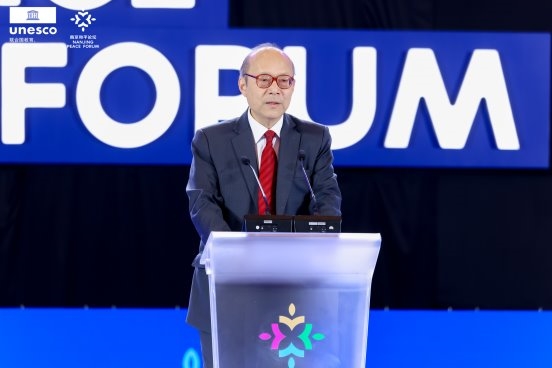
Moving from international consensus to grassroots action, peace is made tangible through individuals and on-the-ground projects. Chen Xu, President of the China Public Diplomacy Association, illustrated that “ecological security knows no borders and green goodwill can cross mountains and seas” with the story of Saikos, an American supporter who helped the Chinese desert restoration pioneer Yin Yuzhen plant trees in the Mu Us Desert. He shared three reflections: prioritize green development and advance peace through cooperation; uphold a win-win mindset and protect common security; and embrace multilateralism to improve global green governance. Chen stressed that China is a committed actor in global green governance. The Eco-Environmental Code issued this year includes a dedicated chapter on international cooperation, clearly defining China’s legal obligations to advance cross-border collaboration on ecological and environmental protection.
From historical memory to contemporary practice, from international consensus to grassroots initiatives, Nanjing responds to the call of our era with urban responsibility: ecological security is the bedrock of lasting peace, and cooperation is a key pathway to security.
Decoding the Logic of Ecological Peace and Sharing China’s Experience
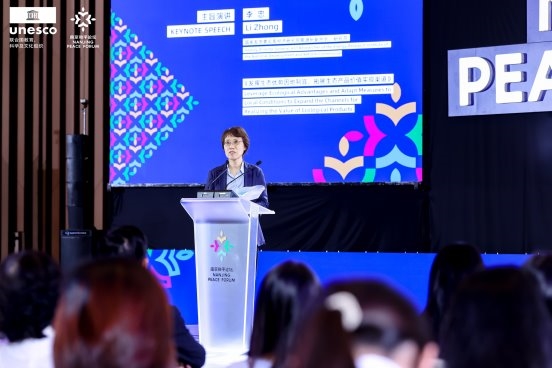
At the forum, Li Zhong, Deputy Director of the Energy Research Institute of the Academy of Macroeconomic Research under the National Development and Reform Commission, delivered a speech on “leveraging ecological advantages tailored to local conditions and expanding channels to realize the value of ecological products.” She explained ecological products and the Gross Ecosystem Product (GEP) accounting system, and introduced two value-realization pathways with regional case studies: government-led ecological compensation and market-oriented industrial transformation. Her presentation explored a sustainable model where ecological protection and economic development reinforce each other.
Shen Zhijun, Director of Nanjing Hongshan Forest Zoo, then shared insights on native species conservation and building healthy ecosystems in the middle and lower reaches of the Yangtze River.
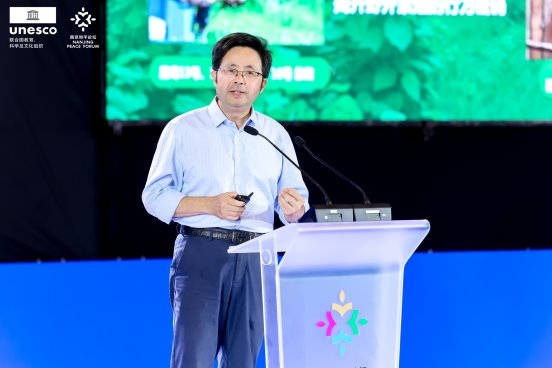
He noted that the Hyla immaculata once thrived in rice paddies across the Jiangnan region, yet its population once dropped to fewer than 2,000 individuals. In 2024, Hongshan launched a conservation program for the species. After more than two years of research, the team bred the world’s largest captive population of Hyla immaculata. Its experimental site in Qixia District was expanded from 23 mu to 121 mu (approximately 1.5 to 8 hectares). Herbicides, pesticides, and chemical fertilizers are excluded from the site; field ridges and shrubs are preserved, ditches are designed as “frog corridors,” and corn and soybeans are intercropped to create a diverse, mutually supportive farmland ecosystem.
“Human health, animal health, and ecological health have always been inseparable,” Shen stated. The profound mission of a modern zoo is to build a bridge connecting cities and wilderness, bringing nature conservation into people’s daily lives.
Peace at its core means symbiosis—peace not only between humans, but also between humanity and nature, and among all living beings. This marks the forum’s most innovative conceptual breakthrough: integrating the One Health framework into peace discourse. Human, animal, and ecological health cannot be treated as separate issues. Breaking governance silos and fostering a community of all living beings is not only insight drawn from Yangtze River Basin governance, but also key inspiration for global sustainable development.
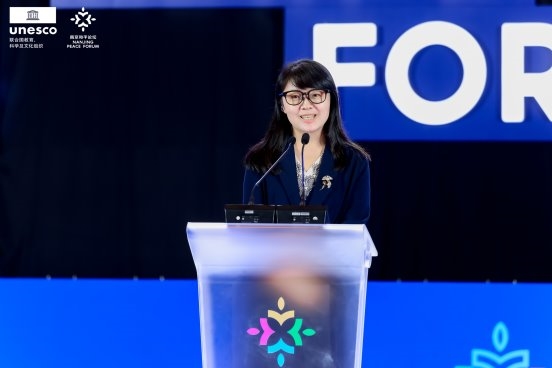
Turning ideas into reality requires coordinated efforts across multiple stakeholders. Ming Xing, Vice President of Strategic Development at Alibaba Cloud Intelligence Group, spoke on “Technology for Good: Building a Better Future Together,” sharing practical explorations of technology-enabled public welfare. From the perspectives of employees, enterprises, and ecosystems, she outlined pathways for public good and argued that public welfare relies on universal participation. Sustainable social impact can only be achieved by pooling goodwill from all sides.
Multiple Perspectives on Peace: Exploring New Pathways for Implementation
Two high-level roundtable dialogues followed. Chinese and international guests held cross-sectoral exchanges and in-depth discussions, exploring practical ways to deeply integrate ecological resilience with peaceful development from the angles of ESG business practice and cultural and civilizational empowerment.
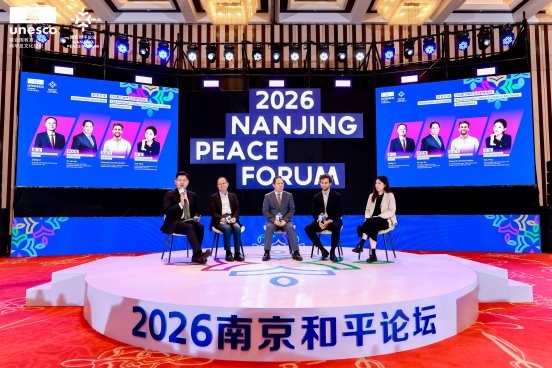
The first roundtable focused on “ESG Empowering Urban Ecological Resilience.” Remarks by Chinese and international corporate representatives delivered a clear message: ESG is shifting from passive compliance to proactive strategy.
Jiang Li, Chairman of Nanjing TICA Climate Solutions Co., Ltd., said TICA follows a development strategy of “one environmental path, two business segments”: TICA Climate Solutions specializes in professional air environment treatment, while TICA Energy focuses on green renewable energy. Green development has always underpinned TICA’s operations.
Gaspard Lemoine-Scelles, China Director of the French group TERAO; Hu Yuanxiang, Managing Partner and Chief Investment Officer of the Europe-China Joint Innovation Center; and Gao Ying, Regional Coordination and Partnerships Director of C40 Cities Climate Leadership Group, spoke in turn, sharing practical experience from enterprises and international city networks in advancing ecological resilience.
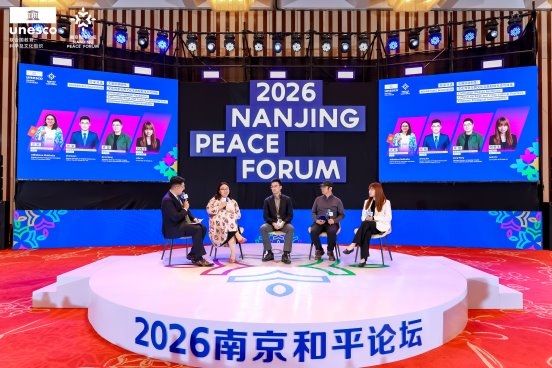
The second roundtable carried a more humanistic theme: “Weaving Resilience Through Civilization: Cultural Heritage and Cross-Cultural Practice Empowering Ecological Sustainability.”
Jiang Meng, Secretary-General of the Nanjing Finless Porpoise Aquatic Life Protection Association, described how the association has partnered with government bodies, universities, and youth volunteers over many years to carry out regular river patrols, public education, and ecological restoration. Finless porpoise conservation has evolved from “experts’ work” into “everyone’s mission.”
Behind this shift lies a deeper truth: ecological protection is not merely a technical project, but also a cultural and civic endeavor.
Mahabbat Alibekova, a guest from Kyrgyzstan and the founder of the China-Kyrgyzstan Cultural Research Institute, believes civilizational resilience ultimately rests with people, and cultural sustainability depends on public engagement. She noted that Kyrgyzstan’s nomadic traditions involve seasonal migration, observing shifts in grasslands and water sources, and leaving resources for future generations. This way of living in harmony with natural rhythms still offers inspiration for ecological sustainability today.
She also shared that at the end of August this year, she hosted and promoted the “Nanjing Week” cultural event in Kyrgyzstan, helping local audiences learn about Chinese poet Li Bai and introducing Chinese participants to Kyrgyz literary giant Aitmatov. This dialogue between poets and encounter between civilizations instantly brought the two peoples closer. She pointed out that cultural exchanges break down barriers and mutual learning builds consensus. Cultural continuity provides a deep social foundation for ecological sustainability, and civilizational resilience passes on the vision of harmonious coexistence between humanity and nature from generation to generation.
Zhang Jun, General Manager of Niushou Mountain Group, introduced Niushou Mountain’s transformation. Once an abandoned mine pit, the site has undergone more than a decade of restoration, advancing ecological and cultural rehabilitation in parallel. Today, its forest coverage reaches 83%. It hosts China’s first Chinese tiger swallowtail butterfly conservation base, and the Usnisa Palace rises on the former mine pit, breathing new cultural life into a scarred mountain. The scenic area is recognized as China’s first zero-carbon historical and cultural tourism destination. It holds a carbon neutrality certificate from the Shanghai Environment and Energy Exchange and has obtained ISO 14068 certification from SGS. Its forest carbon sequestration exceeds operational carbon emissions. He commented that Niushou Mountain’s journey from abandoned mine pit to zero-carbon scenic area proves restoration is creation—landscape, culture, and industry can achieve win-win coexistence. Zero carbon is not an endpoint, but a new starting point.
Liu Jiyu, co-founder of Climate Pai, then presented community-level practices, sharing insights on public participation in climate action and sustainable living communication. She described how cross-border communities use lightweight activities to help citizens understand carbon emissions and adopt low-carbon lifestyles.
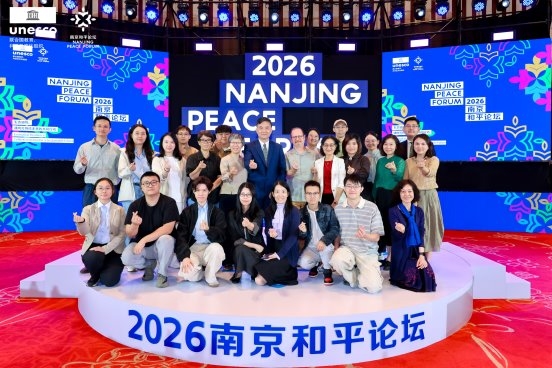
All participants jointly called on peace-minded people across the globe to uphold openness and inclusiveness, advance biodiversity conservation and climate action through collective efforts, and protect Earth’s shared community of life.
Young representatives at the forum stated that in the new era, youth are not only beneficiaries of peace but also peace builders. Going forward, they will actively shoulder responsibilities, join global ecological public welfare and cross-cultural exchange initiatives, and tell stories of ecological peace with the power of youth, rooting the vision of sustainable peace in the public mind. The event has concluded, yet the journey continues. Moving forward, Nanjing will keep leveraging its strengths as an International City of Peace. It will deepen work on ecological peace, inter-civilizational exchange, youth empowerment, and low-carbon co-governance. The city will continue to share Nanjing’s experience in Yangtze River Basin governance, urban biodiversity protection, and industrial ESG transition, and further expand international people-to-people exchanges and multilateral cooperation. It will safeguard the foundation of peace through ecological resilience, and pursue a sustainable future via collective action for symbiosis. Nanjing will continuously contribute its strength and China’s wisdom to building a community of all life on Earth and a community with a shared future for mankind.