
The contemporary stock exchange operates at speeds that defy human comprehension. Floor shouting matches have been permanently replaced by silent data centers located in places like New Jersey and Chicago. Business executives evaluating modern capital markets must understand a core operational mechanic. Capital today is rarely managed by human intuition alone. It is overwhelmingly directed by automated execution systems. Moving away from manual entry fundamentally changes the mathematics supporting market participation.
The Physical Limits of Manual Execution
Consider the biological mechanics of a manual stock purchase. A human reads an updated price quote on a monitor. The individual processes those numbers mentally to form a decision. Finally, the person physically depresses an execution key to send the order. The visual processing lag for a human brain is roughly two hundred milliseconds. Adding the physical reaction time means the hard limit for a person to execute a single command remains locked around two hundred and fifty milliseconds.
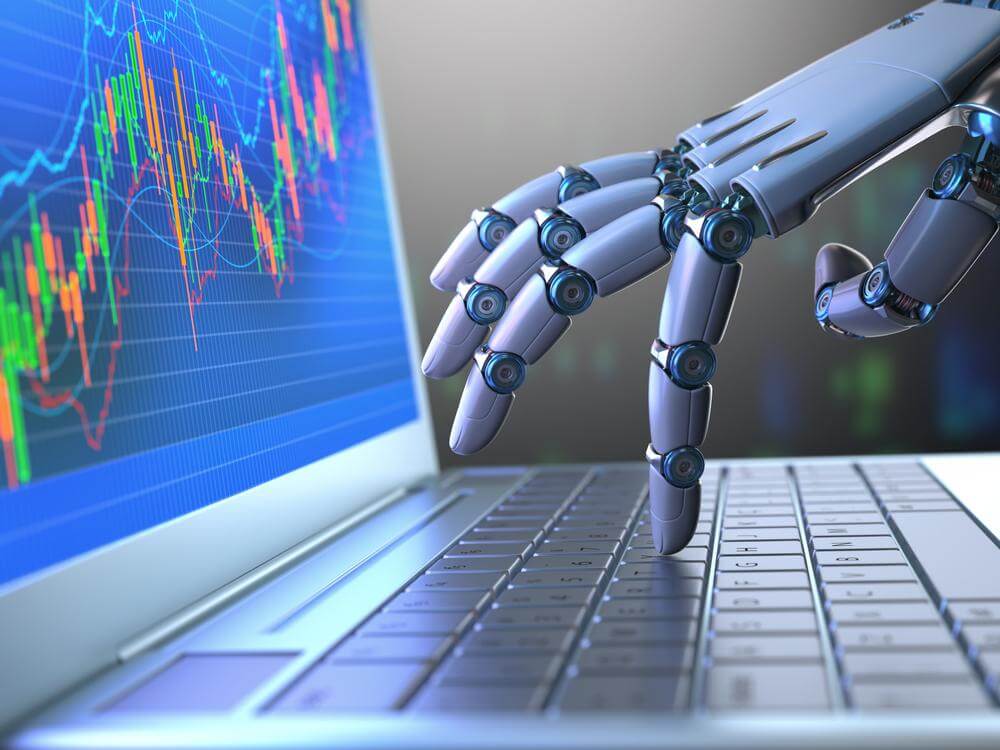
Financial data moves through physical fiber optic cables at almost the speed of light. During a human trader’s two-hundred-millisecond cognitive delay, an automated software model accomplishes an enormous sequence of tasks. The system receives price data from a London exchange and checks it against historical averages stored on Tokyo servers. The software then identifies a pricing mismatch in New York and submits an order. The human participant is still registering the initial visual cue while the machine completes the entire multifaceted transaction loop.
Beyond pure latency boundaries, manual execution suffers heavily from emotional fatigue. Cognitive load increases sharply during periods of high market volatility, causing human traders to freeze during sudden drops or hold losing positions due to stubbornness. Automated engines do not experience fatigue or panic. They strictly execute the mathematical parameters coded into their logic without any hesitation.
How Intelligent Systems Process Market Data
Algorithmic models follow systematic logic separated into distinct phases. The initial phase is immediate data ingestion. Modern markets generate terabytes of numerical information every second. This incredible volume includes level two order book statistics showing pending bids and asks at every single price level across multiple routing networks. Managing this data flow requires intense processing power.
The second phase centers on signal generation. The software scans for mathematical anomalies or volume patterns that precede a directional movement. A structural system might track the volume-weighted average price over a ten-minute window while comparing it to broader sector indices. If a single technology stock diverges from the Nasdaq index without a direct news catalyst, the software flags this divergence as a mathematical mean-reversion opportunity.
The final phase handles the strict execution mechanics. Identifying a valid pattern represents only half the battle. Getting the order matched at the desired price is the true test of a system. Slippage occurs when the market volume moves between the time an order is sent and the time the exchange officially fills it. Algorithms combat slippage by breaking massive institutional block orders into hundreds of smaller increments. When implementing tools like quantum ai, market participants calculate cross-market correlations in milliseconds to secure direct entry points before broader retail volume reacts.
The Hardware Infrastructure Behind the Speed
Software requires heavy physical hardware investments to reach peak efficiency. The algorithms driving modern trading live on specialized servers located physically close to the exchange matching engines. This physical proximity is categorized as colocation. Server farms charge premium rates to host trading hardware just hundreds of feet from the primary exchange hubs. Shaving off distance shaves off time.
The physical distance between servers dictates the strict speed of the transaction. Data travels over buried physical cables where every extra mile adds a noticeable fraction of a millisecond of operational delay. To gain a direct mechanical advantage, proprietary trading firms have invested millions of dollars in microwave transmission networks between major financial hubs like Chicago and New York. Microwave towers transmit electronic signals through the air in a perfectly straight line. Straight line transmission is materially faster than light traveling through the scattered and curved path of a buried glass cable.
For the average business leader, investing in private microwave towers makes absolutely no financial sense. Investigating this heavy infrastructure simply explains why attempting to day trade manually from a standard home internet connection places the person at a severe disadvantage. The market price actively moves and updates on the institutional server long before the retail browser feed registers the change.
The Mechanics of Modern Market Making
A solid understanding of automated execution requires observing contemporary market makers. Historically, market makers were specialized individuals stationed on the trading floor who stood ready to buy or sell specific company stocks to provide continuous liquidity. They profited consistently from the spread between the bid price and the asking price. Today, algorithmic software loops handle this entire liquidity provision process.
Automated market making models submit tens of thousands of quotes per second on both sides of the asset order book. When an individual retail investor places a market order to buy a block of shares, the automated market maker sells them the position. The software then immediately turns around and buys those identical shares back from another seller at a fractionally lower price. The system captures a tiny margin on the spread and repeats the process indefinitely.
By fully automating this process, the modern market maker limits portfolio exposure to sudden directional risks. If heavy institutional selling pressure hits the ticker, the software immediately cancels its pending buy orders and recalibrates its quotes lower. Human market makers in past decades would take heavy financial losses during crashes because they could not physically cancel physical order tickets fast enough.
Mitigating Security Risks and System Failures
Extreme speed introduces highly specific operational dangers to the market. When a high-frequency system logically malfunctions, the errors compound instantly thousands of times per second. The financial industry refers to this exact scenario as an algorithmic loop or a flash crash. The Dow Jones Industrial Average plummeted nearly one thousand points during a single afternoon in May 2010 directly due to a single large sell algorithm draining liquidity from the order book.
Modern automated networks deploy aggressive risk mitigation protocols to prevent repeating these historical errors. The most common defense mechanism is a hard-coded kill switch. If the internal algorithm detects abnormal trading behavior, the software automatically shuts down the entire execution process. Abnormal behavior might include attempting to purchase more shares than the account actively holds in purchasing power or triggering too many separate orders in a ten-second operational window.
Position sizing limits serve as another mandatory safeguard in fast environments. A correctly configured system logic allocates a strict maximum percentage of total capital to any single transaction. If the transaction moves aggressively against the open position, the software triggers a stop-loss order exactly at the mathematical threshold. There is no second-guessing or hoping the stock bounces back eventually. The system accepts the minor calculated loss and immediately begins calculating the next possible entry.
The Power of Historical Backtesting
Before any automated strategy touches real corporate capital, developers force the model through rigorous historical testing phases. Backtesting involves feeding ten or twenty years of past market data into the newly written algorithm to see how the mathematical rules would have historically performed. This diagnostic process exposes deep logical flaws without risking actual balance sheets.
Backtesting carries its own highly specific statistical traps. Curve fitting is the most common mathematical error among inexperienced algorithmic developers. Curve fitting occurs when the programmer tweaks the operating rules too closely to match the historical data perfectly. A curve-fitted model looks highly profitable on paper but fails immediately in live markets because it fundamentally memorized the past rather than actually learning the underlying market mechanics.
To combat this curve fitting danger, developers separate their historical trading data into strict training sets and separate testing sets. They build the model on data from one period and then run it blindly on data from a completely separate chronological period. If the algorithm continues to generate positive expected value in the blind data, the developers move to the final testing phase. This involves paper trading live market data with simulated capital to accurately monitor how the software handles real-time execution slippage.
Integrating Alternative Data Sources
The core inputs for automated systems have expanded far beyond basic stock price and trading volume statistics. Institutional operations now feed highly alternative data streams into their execution engines. These alternative datasets include satellite imagery of commercial retail parking lots. Systems also actively track shipping manifests from major global ports along with anonymized consumer transaction data.
A machine learning text model can process a thousand quarterly corporate earnings reports in under five seconds. The software rapidly extracts specific written phrases regarding forward revenue projections. It compares the linguistic tone of the management team to the verbiage used in previous financial quarters. The model confidently initiates a trade based strictly on that linguistic analysis before a human reader even finishes the introductory paragraph of the issued press release.
Human financial analysts require entire weeks to read and digest that same volume of physical text. By the time a fundamental analyst formally publishes a research report, the automated execution systems have already priced the new information into the specific corporate stock. Executives who recognize this structural shift can deliberately adjust their specific investment timelines. They move away from short-term rapid speculation to focus heavily on long-term capital allocation where deep human judgment retains a strict operational advantage.
The Democratization of Advanced Execution
A decade ago, algorithmic execution belonged exclusively to massive quantitative hedge funds and major institutional investment banks. Building the required digital infrastructure demanded a massive corporate operating budget. A firm had to hire huge teams of specialized engineers to write custom execution code and rent highly expensive server space in primary financial data hubs.
Cloud server accessibility has altered this situation completely. The heavy technical processing power required to backtest decades of market data can now be rented by the hour from major corporate cloud providers. Retail brokerages currently provide transparent application programming interfaces directly to their individual clients.
This structural accessibility guarantees that individual active participants and smaller proprietary trading funds can deploy software models that truly rival institutional models. They can set strict mathematical rules for specific options execution without writing base code. They can run complex statistical arbitrage strategies across multiple distinct asset classes independently. They optionally let the software manage the active portfolio twenty-four hours a day without constant human supervision. The technological execution field is rapidly flattening.
The Future of Regulatory Compliance
As automated software models consume greater total market share, global regulatory agencies face the extremely difficult task of monitoring rapid execution strategies. Traditional financial market regulation was originally designed completely around observable human behavior. Laws regarding insider trading and market manipulation assume a human intentionally committed a defined legal violation. Applying these human-centric laws to independent software networks introduces distinct legal complications.
When an algorithm executes an illegal quote spoofing strategy, investigative authorities must determine whether the programmer deliberately coded the manipulation or if the software developed the strategy independently through internal machine learning loops. Spoofing actively involves placing massive invisible orders to manipulate the quoted price and then instantly canceling them before exchange execution. Regulators require massive data processing tools simply to detect these microsecond infractions on the tape.
Financial authorities are beginning to require algorithmic trading firms to submit their base code for periodic regulatory auditing. Firms must strictly prove their systems contain appropriate safety limits and do not passively destabilize the broader global market architecture. Business leaders must anticipate these heavy compliance costs when building or purchasing automated market systems in the future.